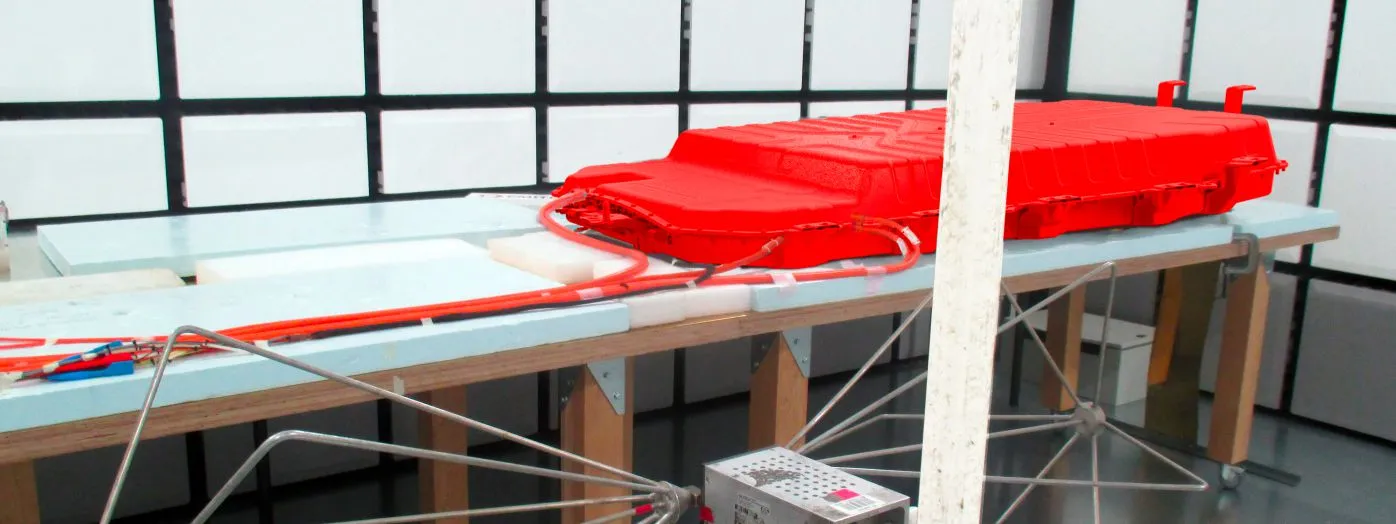
EMC testing for batteries, modules and cells
Ensure the electromagnetic compatibility of your batteries and avoid critical interference
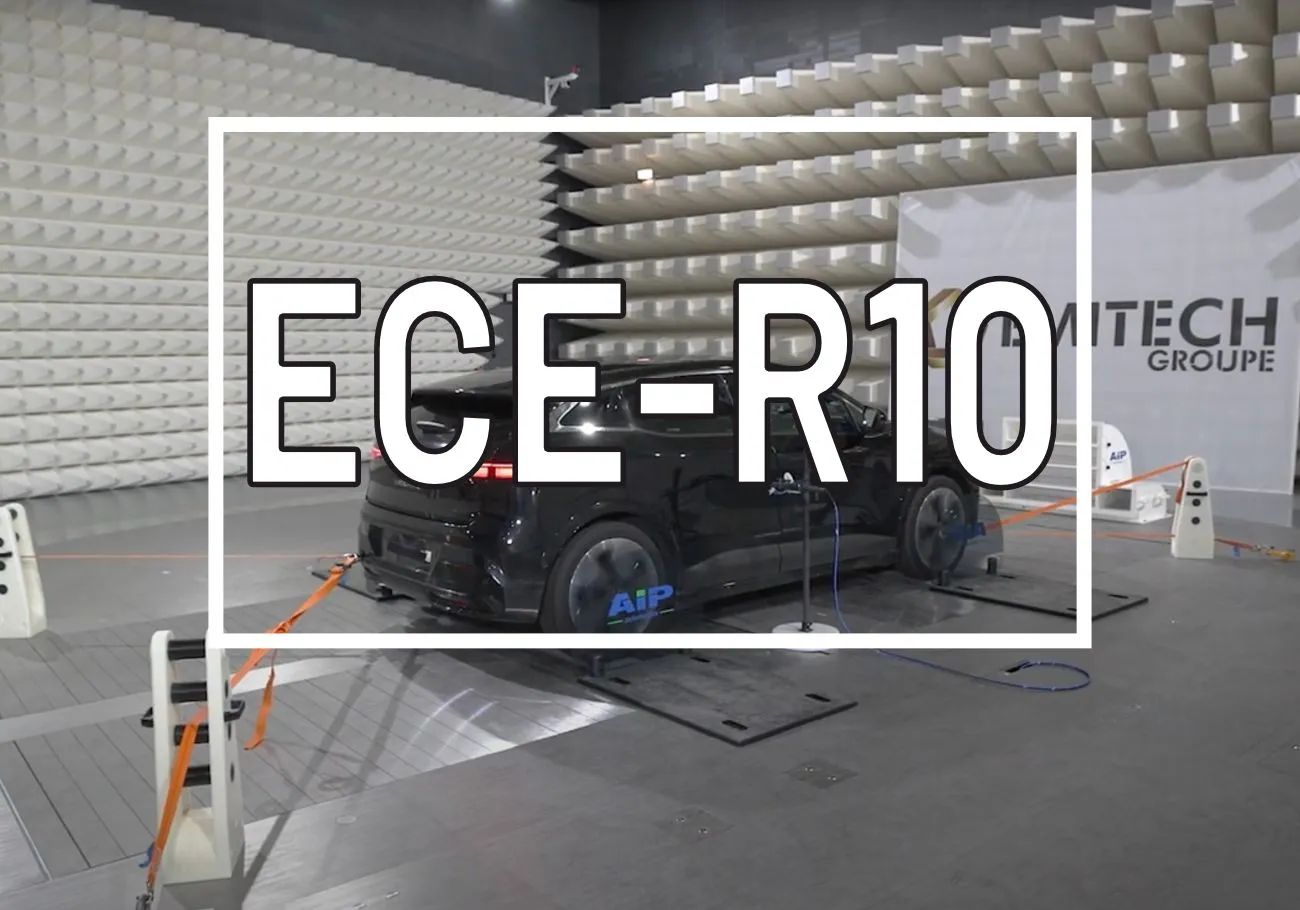
The development of lithium-ion batteries and their management systems (BMS) is accompanied by strict electromagnetic compatibility (EMC) requirements.The Emitech Group offers comprehensive EMC testing for batteries, modules or packs, in line with regulatory requirements (ECE R10) and manufacturers' standards applicable in the transport sector.
Ask for a quote
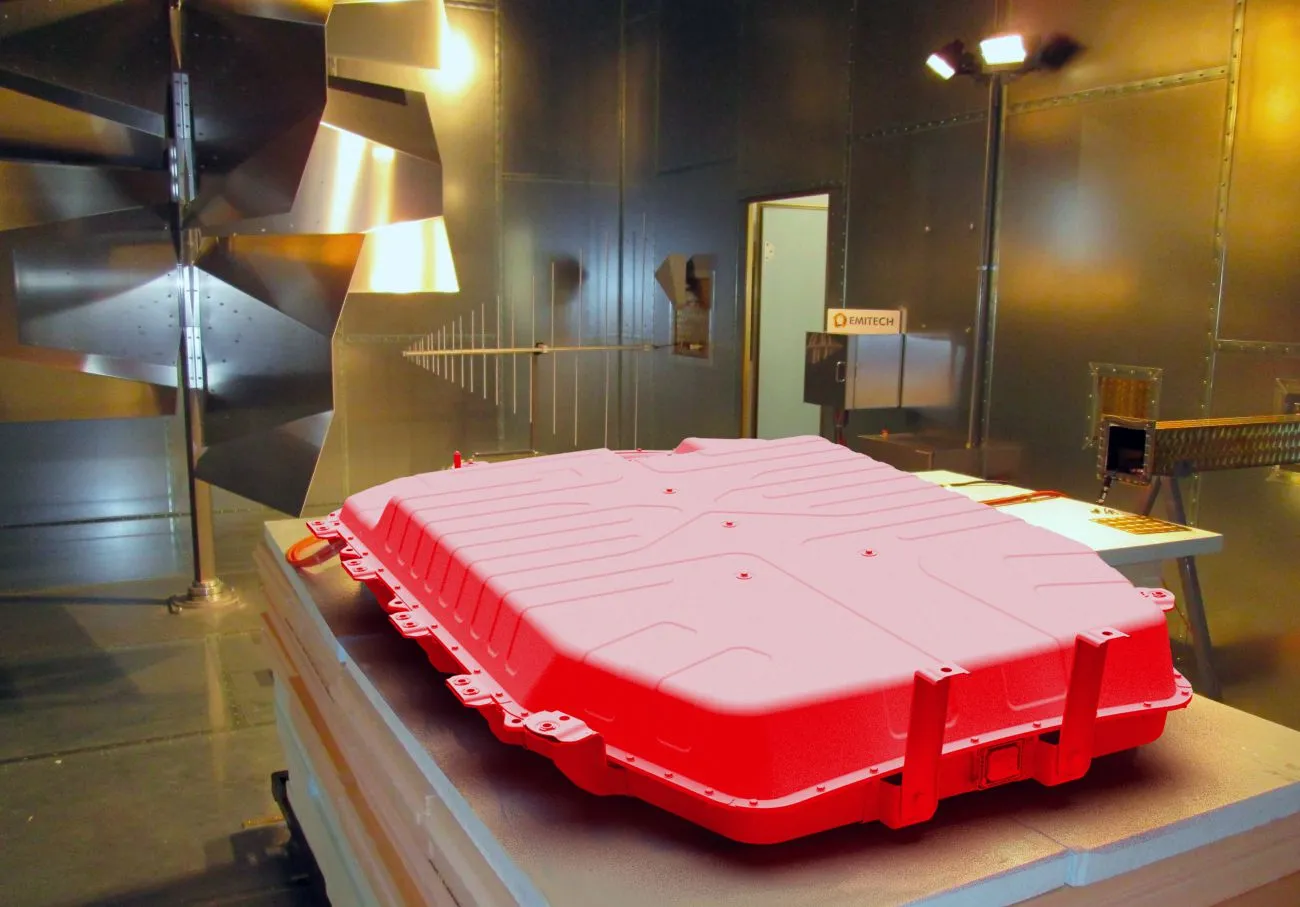
EMC testing is a common requirement for all equipment placed on the market in Europe and around the world. For batteries used in consumer products, industrial applications, etc., EMC requirements are verified during tests on the equipment incorporating the battery as part of procedures such as CE marking for Europe or equivalent in other regions of the world.
Why EMC tests on batteries?
Batteries, particularly packs incorporating a BMS, converters or communication interfaces (CAN, LIN, Ethernet), can :
- Emit electromagnetic interference that is harmful to other equipment (radio, ECU, sensors),
- Be sensitive to external disturbances, with serious consequences: malfunctions, power cuts, measurement errors, thermal runaway.
- Check compliance with international standards and customer specifications,
- Detect EMC design weaknesses (wiring, shielding, filtering, etc.),
- Ensure cohabitation with sensitive ECUs (ADAS, converters, RF equipment),
- Validate functional robustness in severe electromagnetic environments.
What are the applications?

Battery packs for electric and hybrid vehicles

On-board modules for railways

On-board modules for aeronautics

Stationary batteries for critical infrastructures and medical equipment
Electromagnetic compatibility (EMC) testing: Emissions and immunity
Our EMC tests can be carried out with the battery actually in operation during the test (active cycling within the EMC chamber), which ensures that measurements are taken under real-world conditions rather than on a passive battery.
Electromagnetic emissions
- Conducted emissions: from 150 kHz to 108 MHz (on power and signal lines),
- Radiated emissions: from 30 MHz to 1 GHz (or even up to 6 GHz depending on the standard),
- Analysis during representative phases: charging, discharging, standby, wake-up, etc.
Electromagnetic immunity
- Radiated immunity (ISO 11452-2): exposure to a modulated electromagnetic field (80 MHz to 1 GHz),
- Radiated immunity in a mode-stirring reverberation chamber (CRBM): from 80 MHz to 18 GHz — particularly suitable for testing under statistically representative conditions and at high immunity levels,
- Conducted immunity (BCI, ISO 11452-4): injection of disturbances into cables,
- Electrical transients ISO 7637-2/3,
- Functional testing under disturbances: monitoring of the BMS, relays, DC/DC converters, etc.
Charge and discharge tests
- Voltage, current, temperature, state of charge (SoC), CAN communication monitoring,
- Fault detection: reset, power failure, measurement error, loss of communication.
Talk to our experts in EMC battery testing
What standards and benchmarks are covered?
- ECE R10: EMC approval for vehicles and their subsystems,
- ISO 11452 / ISO 7637 / CISPR 25: automotive EMC,
- Customer-specific EMC (Renault, Stellantis, VW, Airbus, etc.).
Our dedicated technical resources within the Emitech Group
- Over 50 EMC chambers across the Group, covering all types of LV/HV equipment (batteries, electric motors, BMS, ECUs, lighting, etc.)
- 3 m and 10 m anechoic chambers (CISPR 16 — complete vehicle up to 12 tonnes)
- Mode-mixing reverberation chambers (CRBM): 80 MHz to 18 GHz
- GTEM cells
- ESD, BCI, ISO transients and direct injection test facilities
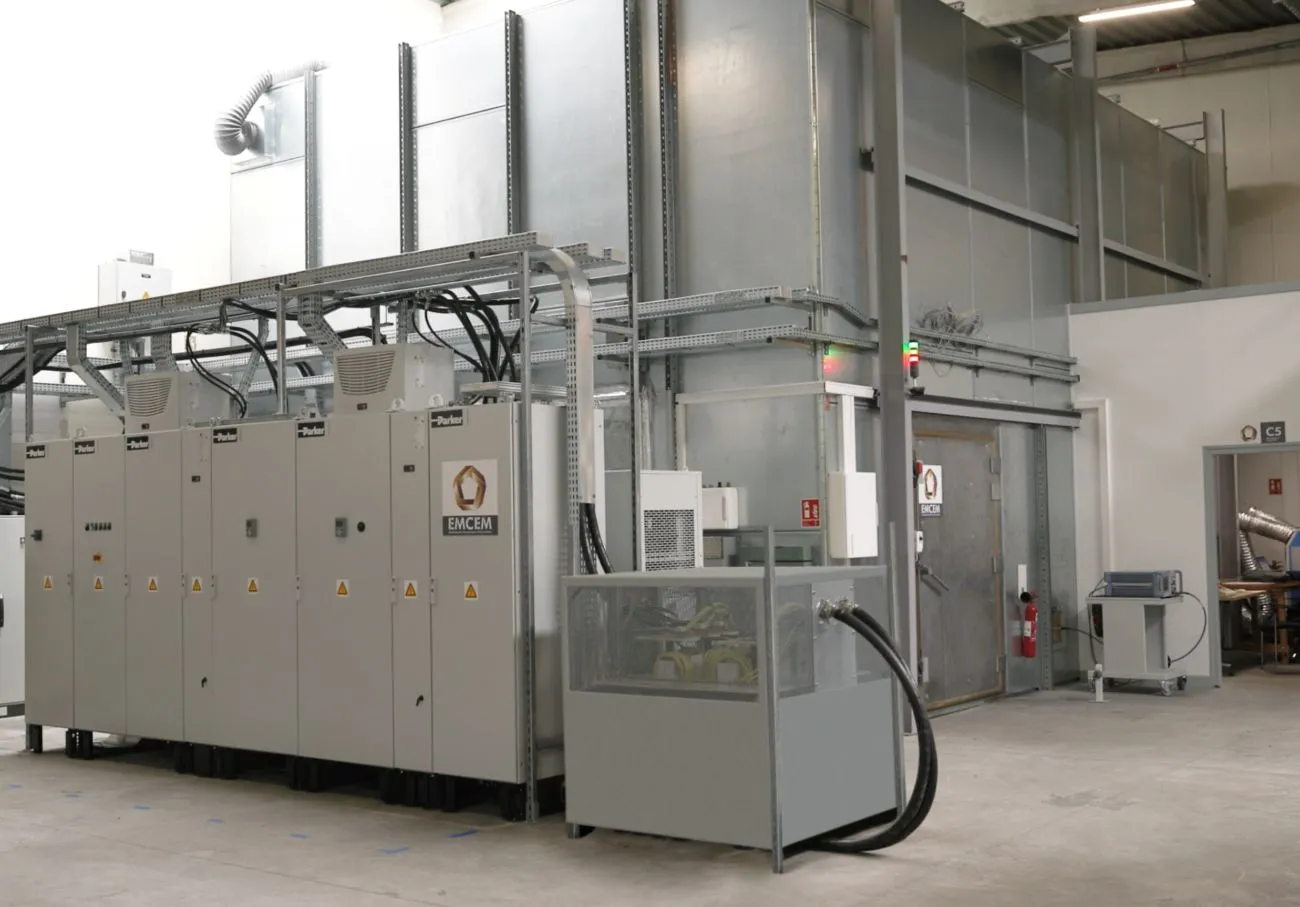
- B Cycle test benches integrated into EMC chambers (up to 1000 V / 1000 A): the battery is actively charged or discharged during emission and immunity measurements, at different SoC levels and according to representative current profiles — a rare capability that ensures the representativeness of the results.
Why choose the Emitech Group for your EMC tests?
- European leader in EMC testing
- Resources tailored to high-power batteries,
- Full simulation of functional scenarios during testing,
- Support through to ECE R10 approval.
Needs
Discover a selection of additional resources that explore topics related to this page including regulatory contexts, technical articles, and specific areas of expertise. These materials provide further insight to help you better understand the key challenges and available solutions.
Contact us for a quote
Are you developing a battery subject to strict EMC requirements?Contact the Emitech Group to carry out your electromagnetic compatibility tests under representative conditions and in accordance with current standards.
Request a personalised quote